 Industries Using Briquetting
 Value Of Briquetting
 Applications For Briquetting
 Insights
Disposing of swarf is a costly problem. Briquetting solves it.
If you work with grinding or cutting processes, you know how much fluid you lose and how fast sludge/swarf adds up. Disposing of hazardous swarf/sludge is labor-intensive, expensive, and creates safety challenges. Most manufacturers and machine shops waste 50% to 60% of their oil and fluids. But it doesn’t have to be this way.
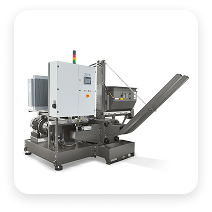
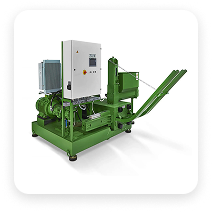
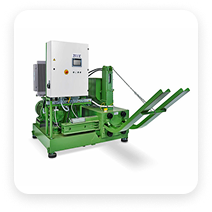
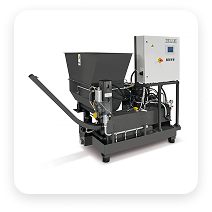
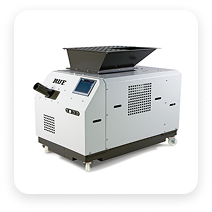
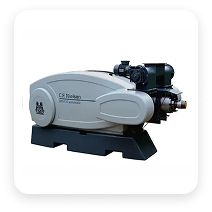
RUF swarf briquetting machines compress and dewater your metal at the same time, so you recover your fluids safely and lower disposal costs.
Up-front lab testing confirms quality and suitability prior to purchasing a machine.
A modern swarf briquetting machine is good for the environment and your business.
Become a cleaner, safer shop with less waste and more space.
Find out how swarf/sludge briquetting can pay off for your operations.
- Recover up to 97% of water and oil-based fluids from metal scrap
- See savings quickly: Reclaiming just 50 gallons of oil worth $15/gallon is $750.
- Transport materials safely at lower costs.
- Resell sludge/swarf briquettes wherever you sell other chips.
- Keep waste out of landfills and support sustainability and zero-waste goals.
- Reduce waste volume dramatically and free up valuable floor space.
- Create a safer workplace.
Stories from the shop
“The most staggering metric was the 19-day payback period—achieved through coolant savings alone.”
Improve safety and boost ROI with a RUF swarf briquetting machine.
- See ROI in just a few weeks for expensive fluids
- Run with autonomous, 24/7 operation that lowers labor costs.
- Stay up and running with responsive, U.S.-based service.
- Reduce risks, because no artificial binders are used that can lead to combustion or burn off while melting.

RUF swarf briquetting systems work with a variety of metals.
- Hot Rolled Sludge
- Pinion Sludge
- Tin Sludge
- Milled Sludge
- Ring Sludge
How swarf briquetting works
Step 1
Swarf shavings or chips are moved to a pre-charging chamber by a screw conveyor.
Step 2
A pre-charger presses the material into the main pressing chamber.
Step 3
Cutting fluids are removed.
Step 4
The main pressing ram compresses the material into the mold and forms the briquette into its final shape and density.
Step 5
Briquettes are pushed out of the machine one at a time.