 Industries Using Briquetting
 Value Of Briquetting
 Applications For Briquetting
 Insights
Pricing
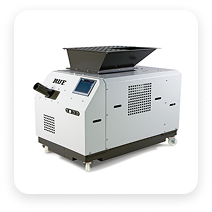
Our smallest machine, Formika, starts at $67,500. Our metal series machines start at $105,000.
Our wood series machines start at $130,000.
Our biomass series machines start at $127,000.
RUF machines are built for heavy duty, industrial applications. They are constructed of high grade steel, machined to precision and use premium components. RUF has a dedicated production facility to exclusively build our components to our rigorous specifications.
Quality components, built to our specifications. RUF uses the highest grade steel, pumps and fittings in our machines.
RUF does not offer financing but we can connect customers to some partners that we’ve worked with in the past.
Preventative Maintenance agreements are quoted on an individual basis based on machine type and location.
Certainly, we have many satisfied customers across North America. We can connect prospective customers with a customer in their area.
General
Do you produce a waste product? Then YES – most waste products can be briquetted but we need to test to confirm. Contact us for a free press test.
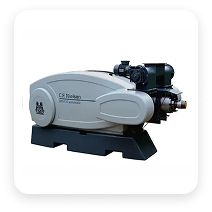
We have two technologies: hydraulic and mechanical. For the hydraulic press technology we utilize a high pressure ram to press the material in a mold. For mechanical press technology heavy duty eccentric piston to press the material through a die.
Robust construction configured specifically for the application, coupled with US based service and support.
RUF systems
Yes, RUF US has factory trained field service technicians (FST) available to travel to your site for onsite repairs. We typically dispatch a FST within a couple of days, if scheduling permits. We like to ask about 2 week notice for preventative maintenance visits.
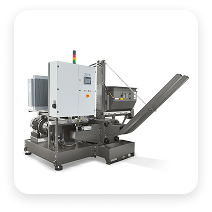
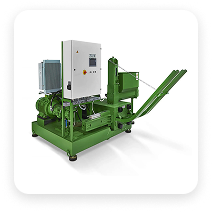
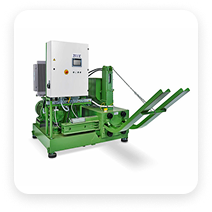
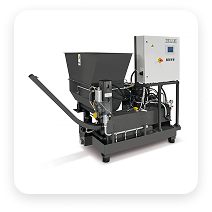
There is no standard machine configuration. A typical machine is about 6.5 feet long x 6.25 feet wide and 6.5 feet tall. They weigh about 6,500 lbs.
RUF machines are ideal vessels to help with your sustainability goals and a circular economy. Our wood and biomass machines help with land-fill volume reduction, waste recovery and carbon capture projects. While our metal and sludge machines help with fluid recovery/recycling, land-fill volume reduction and reclaiming scrap.
RUF US covers sales and service for all of North America
RUF US does not sell in Europe but our parent company does and is based in Germany (Bavaria). Here’s a link to the European site: https://rufgroup.com/en
Briquette press is a small trial in our factory in Ohio. The prospective customer sends us a small batch of material to be run through our test machines. Press tests confirm: material briquettability, volume reduction, through-put and pressure requirements. For metal materials, we can estimate fluid recovery and moisture content of briquette.
RUF welcomes prospective customers to our facility to witness the press test. This is an excellent way to see the machines, process and answer questions.
Briquetting can be beneficial to many industries. Our core industries are metal manufacturing and scrap recycling centers but we sell machines to small cabinet shops all the way up to large OEM automotive manufacturers.
The end use for briquettes depends on the material type. Wood scrap can be sold as a home heating source, metal briquettes can be sold back to foundries and some biomass briquettes can be an efficient facility heating source.
In a perfect world the answer would be RUF never has problems. In reality, our machines are used in heavy industrial applications. The biggest issue customers run into with our metal machines is running a piece of solid material through the machine. With wood and biomass materials, the biggest issue consistency of material size and moisture content. Most issues can be mitigated with effective control processes.
RUF is not a machine broker but we can connect customers with companies we have worked with in the past.
Briquetter machines need consistent material to effectively produce briquettes. In feed requirements may include shredders, dryers and material handling. Post briquetting may require fluid storage and filtration for metal machines and packaging solutions for wood and biomass.
Metal
Depending on material type, metal briquettes are typically sold back to foundries to be remelted.
Metal turnings can be challenging to briquette without shredding. RUF machines can handle some turnings but it depends on material type, turning length and properties.
Metal briquetting machines vary greatly depending on press force required to briquette the material and volume. The biggest difference in machines is the hydraulic press cylinder and hydraulic motor along with peripheral equipment.
Metal briquettes will have a very low residual moisture content (typically less than 3%) post pressing. Most customers/foundries pre-heat the briquettes prior to remelting to ensure any residual moisture is burned off.
Most briquetters are built to order per customer specification. Typically lead time from PO to Start-up is about 30 weeks. Stock machines can be shipped and installed in 2-3 weeks after receipt of order.
In most cases, yes, your scrap vendor will pay a premium for briquettes vs loose scrap due to the density of briquettes. In some cases, there may not be a premium but savings on logistics, fluid recovery and lower disposal costs will quickly justify the machine purchase.
Yes, most fluid can be captured from the pressing process and sent back to a filtration system for reuse. Briquette machines are normally equipped with a catch basin and fluid pump to capture fluids.
Yes, in most cases. RUF has a sludge machine, specifically designed for metal sludge/swarf. RUF encourages prospective customers to send in material for press testing to confirm briquetting.
The ROI on metal briquetting depends on many factors such as: material type, type of fluid, volume and market conditions. Some customers have seen an ROI on initial investment in a few months but typically ROI is 12 to 18 months.
Wood
Wood briquettes are typically sold to consumers through retail stores. Wood briquettes are commonly sold at DIY stores and campgrounds. Wood briquettes can also be used for industrial uses like: facility heating, gasification or torrefaction. Wood briquettes have a high caloric value so they burn long and hot.
The main differences are the motor size and method. Higher capacity machines have larger motors and larger press pistons. For very large capacities, we offer a mechanical press.
Wood briquetting requires the material to be less than 15% moisture at time of briquetting. Most “green lumber” waste has a higher moisture content. High moisture content will result in poor briquette quality and possibly damage the press.
Most briquetters are built to order per customer specification. Typically lead time from PO to Start-up is about 30 weeks. Stock machines can be shipped and installed in 2-3 weeks after receipt of order
The ROI on briquetting depends on many factors such as: material type, volume and market conditions. Consumer briquettes may require some additional packaging machinery for resale so there are additional costs to consider. Most customers have seen an ROI on initial investment in as little as 6 to 18 months.
Wood briquettes can be sold directly to consumers, burned in an industrial furnace for heat or sent to the landfill. RUF’s sales team can help determine the best outlet for briquettes in your location.
Biomass
Biomass briquettes can be used for a variety of applications. Most agricultural waste is used for industrial heating applications. Some biomass briquettes are used for animal feed, bio-gas, heating or gasification projects.
The main differences are the motor size and method. Higher capacity machines have larger motors and larger press pistons. For very large capacities, we offer a mechanical press.
Biomass briquetting with the mechanical press requires the material to be less than 20% moisture at time of briquetting. High moisture content will result in poor briquette quality and possibly damage the press.
Most briquetters are built to order per customer specification. Typically lead time from PO to Start-up is about 24 to 30 weeks. Stock machines can be shipped and installed in 2-3 weeks after receipt of order.
Biomass briquettes are typically burned in an industrial furnace for heat/cooking, animal feed/bedding or sent to the landfill. RUF’s sales team can help determine the best outlet for briquettes in your location.