 Industries Using Briquetting
 Value Of Briquetting
 Applications For Briquetting
 Insights
Clear your floors and reclaim value with cast iron briquetting.
Cast iron briquetting unlocks hidden value
Loose cast iron chips create a costly hassle to clean up, handle, and dispose of. Worth little to nothing, they’re taking up valuable floor space. But you can solve the waste problem with briquetting, which pays for itself quickly.
Cast iron briquetting is a better alternative for companies who have high volumes of waste.
Benefits of RUF cast iron briquetting
Cast iron briquetting turns loose chips into dense, high-value briquettes that melt more efficiently with less slag and energy.
Increase value & improve melt efficiency
- Increase scrap value by 10–20%
- Earn higher prices because briquettes yield more metal in smelting
- Reduce melting smoke with cleaner, drier briquettes
Reduce waste & cut operating costs
- Reduce waste significantly and reclaim floor space
- Eliminate disposal fees and lower overall waste costs
- Recover up to 97% of costly cutting fluids
- Automate scrap handling and cut manual labor by up to 50%
Improve safety & support sustainability goals
- Create a safer workplace by removing loose, hazardous chips
- Improve EPA and OSHA compliance
- Keep waste out of landfills and support zero-waste goals
RUF is the leading manufacturer of cast iron briquetting machines in North America
With over 50 years experience in briquetting in Europe and North America, RUF knows how to help manufacturers squeeze more value from iron scrap.
Why a RUF cast iron briquetting machine delivers higher value
- Delivers ROI in as little as 12 months.
- Runs with autonomous, 24/7 operation that lowers labor costs.
- Keeps operations up and running with responsive, U.S.-based service.
Swarf briquetting for
cast iron
All that extra fluid waste produced during operations? RUF has a briquetting machine that can turn it into briquettes, which can be sold or reused in your own operations.
How are cast iron briquetting works
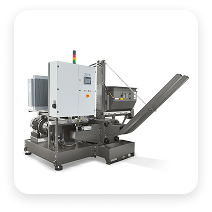
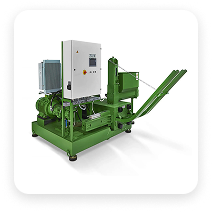
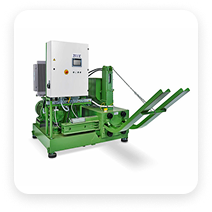
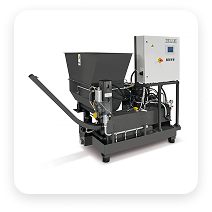
Cast iron briquettes formed in RUF briquetting machines are made of two simple things: Metal and pressure.
Step 1
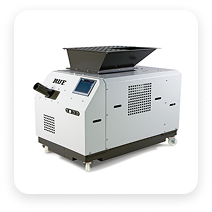
Cast iron swarf starts out in a hopper.
Step 2
A screw conveyor moves the scrap material into a pre-charger chamber where a piston, driven by hydraulics, compacts the cast iron byproducts.
Step 3
The primary press piston further compacts it, pushing it into a mold to form a dense, high quality briquette.
Step 4
Cast iron briquettes are pushed out of the machine one at a time.