 Industries Using Briquetting
 Value Of Briquetting
 Applications For Briquetting
 Insights
Paper and textile waste creates constant handling and disposal challenges
Paper trim, textile fibers, lint, and dust take up significant space relative to their weight. Containers fill quickly, change-outs are frequent, and valuable labor time is spent managing waste instead of production. Disposal costs add up, especially when material must be moved often.
Briquetting compresses material into dense, stackable briquettes that dramatically reduce volume.
Benefits of a paper and textile briquette press
Paper and textile dust briquetting compresses loose fiber into dense, uniform briquettes, reducing volume and making waste easier to handle, store, and remove. So your operations become more efficient. When bulky waste turns into a compact, predictable output, your business becomes much more efficient.
Reduce volume and handling
- Shrink waste to a fraction of its original size and reclaim floor space
- Fewer full containers and bin change-outs
- More predictable waste flow
Lower labor and disposal costs
- Spend less time and money moving and managing paper and textile waste
- Reduce hauling frequency
- Lower disposal and transportation costs
Improve storage efficiency
- Store more waste in less space
- Stack and move briquettes more easily than loose fibers
- Reduce clutter around production areas
Manufacturers trust the quality of RUF paper and textile dust briquetting machines
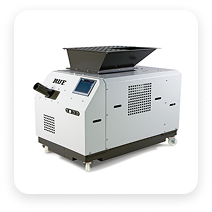
- Systems engineered for paper trim, textile fibers, and dust
- Equipment designed for continuous, indoor production environments
- U.S.-based parts and service for dependable uptime
- Free lab testing eliminates uncertainty before purchase